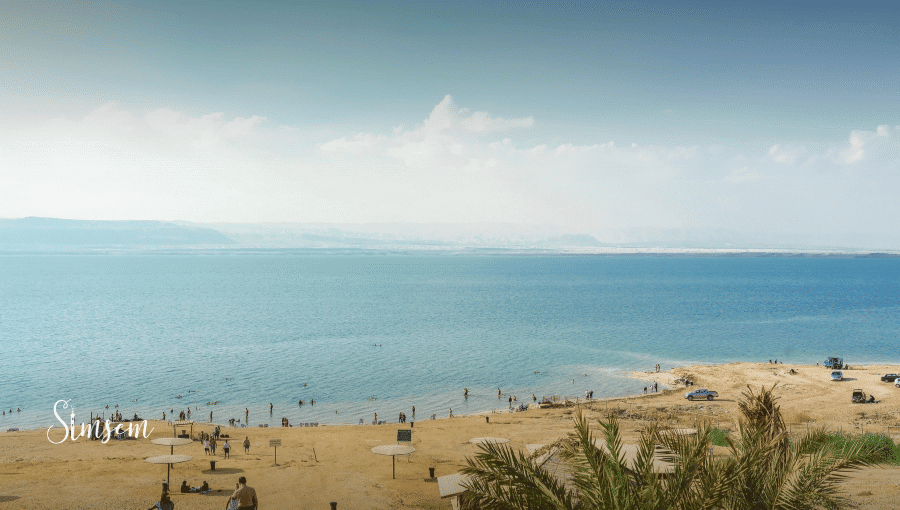
Ma’in Hot Springs, also spelled Main or Ma In and known in Arabic as Hammamat Ma’in, is where hot water pours straight out of the cliffs. In a deep valley between Madaba and the Dead Sea, more than 60 mineral springs feed waterfalls you can stand under and pools you can soak in, all about 264 meters below sea level. Families from Amman come for a day out, travelers pair it with Madaba and the Dead Sea, and people have been bathing here for well over 2,000 years. Here’s what to expect, what to bring and how to fit it into a trip.
Planning a trip? Start with our complete Jordan travel guide: where to go, when to visit, visas, budget and local guides.
Ma’in Hot Springs at a glance
| Topic | The quick answer |
|---|---|
| Where | Madaba Governorate, between Madaba and the Dead Sea; about 27 km from Madaba |
| Also called | Hammamat Ma’in, Ma’in Spa |
| Elevation | About 264 m below sea level |
| Springs | More than 60, feeding several waterfalls and pools |
| Water temperature | Around 45–60 °C (113–140 °F) where it leaves the rock; cooler in the pools |
| Ways to visit | A day ticket for the public area, or a stay or day pass at the resort |
| Time needed | Half a day; a full day with Madaba and Mount Nebo |
| Best season | Late fall to spring; winter is the most popular time |
What are the Ma’in Hot Springs?
Ma’in is a group of hot mineral springs in a steep, narrow valley that drops from the Madaba plateau toward the Dead Sea. More than 60 springs rise here at different temperatures but with a similar chemistry. Their water spills over the valley walls in waterfalls, and over time the minerals have built up colored terraces on the rock beneath them.
The setting is the main draw. You arrive by a winding road through bare hills, and then the valley floor turns green with reeds and palms around the falls. The largest waterfall pours into a series of stepped pools where people sit, soak and let the hot water hammer their shoulders.

The water: heat and minerals
The springs emerge at roughly 45–60 °C (113–140 °F), which is too hot to sit in for long. By the time the water has fallen down the cliff and spread through the pools it has cooled to bathing temperature, though some spots stay very hot. Feel the water before you get in, and keep children close.
The water carries sodium, calcium, chloride, radon, hydrogen sulfide and carbon dioxide, which is why it can smell faintly of sulfur. Ma’in is known in Jordan as a place for therapeutic bathing. Many visitors come hoping to ease skin problems, poor circulation, or joint, back and muscle pain, and the springs are busiest in winter, when the warm water feels best. If you have a heart condition, are pregnant or have any health concerns, ask your doctor before soaking in very hot water.

Public area or resort?
The valley is shared between a public bathing area and a resort and spa. Which one suits you depends on the kind of day you want.
The public area
This is the lively, local side of Ma’in. You buy a ticket at the gate and get access to the public waterfalls and pools. On Fridays and holidays it fills with families from Amman and Madaba, with picnics, children in the shallow pools and people lining up under the falls. Facilities are basic, so bring what you need (see the tips below).

The resort
The Ma’in Hot Springs Resort and Spa sits beside the falls, and part of the valley is reserved for its guests. You can stay overnight or ask about a day pass, which gives you quieter thermal pools, a spa and restaurants. It’s the easier choice if you want towels, loungers and a calmer atmosphere. Check the resort’s current options and opening hours before you go, as they change.
Good to know: Jordan is a conservative country, and the public area is mostly used by local families. Modest swimwear, or a T-shirt and shorts over it, is the comfortable choice there. The resort is more relaxed.
Herod, the Romans and 2,000 years of bathing
People have soaked in the hot springs of this valley for thousands of years. The best-known visitor is Herod the Great. According to the historian Josephus, Herod went to the hot springs near the Dead Sea shortly before his death in 4 BC, hoping they would cure him. Those were the springs of Callirrhoe, on the shore where the Ma’in valley meets the Dead Sea, and they appear on the 6th-century Madaba Map mosaic. Herod’s hilltop fortress of Machaerus (Mukawir) is close by, and local tradition says he bathed at Ma’in too.
The springs stayed in use long after. The photo below, from the first half of the 20th century, shows a family from Salt camped at the springs of Zarqa Ma’in.

Getting there and when to go
Ma’in is about 27 km from Madaba and about 74 km from Amman. Most visitors come by car, taxi or with a guide. The road from Madaba crosses the plateau and then winds steeply down into the valley, with wide views on the way.
Late fall, winter and spring are the best times to go. Summer in the valley is very hot, and hot water is much less appealing. Weekdays are quieter than Fridays and public holidays, and mornings are calmer than afternoons.

What to bring and tips
- Bring a towel and a change of clothes. The public area doesn’t provide them.
- Wear water shoes or sandals. The rocks and terraces are slippery.
- Bring water and snacks, especially for the public area.
- Test the water first. Some spots near the falls are very hot.
- Leave jewelry behind. The mineral water can tarnish silver.
- Don’t stay in too long. Take breaks and drink water between soaks.
- Check before you go. Tickets, hours and which pools are open can change, especially after winter floods.
Combine it with Madaba, Mount Nebo and the Dead Sea
Ma’in sits in one of the easiest day-trip areas from Amman. A common route is Madaba and Mount Nebo in the morning, the hot springs in the afternoon and then the road down to the Dead Sea. If you’re more into adventure, Wadi Mujib is a little farther south along the Dead Sea Highway, and Herod’s fortress at Mukawir is a short drive away.
Local-guided experiences
A local guide makes the Madaba, Nebo and Dead Sea area easy: no navigating the valley roads, and someone to explain the mosaics, the history and where to stop along the way.

Jordan Explorer: Madaba, Mount Nebo & Dead Sea Wonders
Madaba’s mosaics, the view from Mount Nebo and a float in the Dead Sea, with a traditional Jordanian breakfast and lunch and round-trip transport.

7 Nights in Jordan: Iconic Landmarks & Christian Heritage
Petra, Wadi Rum, Amman and the Dead Sea, plus the Baptism Site, Madaba and Mount Nebo.
Ma’in is in the same area as the Jordan Explorer day, so ask your guide about adding the hot springs.
Find a local guide: browse all local guides in Jordan by destination, from Amman to Madaba, Petra and Aqaba.
Ma’in Hot Springs FAQ
Are the Ma’in Hot Springs worth visiting?
Yes, especially from late fall to spring. Standing under a hot waterfall in a desert valley is a rare experience, and it fits easily into a day with Madaba, Mount Nebo or the Dead Sea.
How hot is the water at Ma’in?
The springs emerge at around 45–60 °C (113–140 °F). The pools below the falls are cooler, but some spots stay very hot, so test the water first.
How far are the Ma’in Hot Springs from Amman?
About 74 km. They’re about 27 km from Madaba, so most people visit as a day trip from Amman, Madaba or the Dead Sea.
Can you visit Ma’in without staying at the resort?
Yes. The public area has its own ticket and its own waterfalls and pools. The resort also offers stays and, at times, day passes.
What should I wear at Ma’in Hot Springs?
Modest swimwear, or a T-shirt and shorts over it, in the public area, which is mostly used by local families. Bring water shoes, a towel and a change of clothes.
Did Herod bathe at Ma’in?
Josephus says Herod the Great visited the hot springs near the Dead Sea for a cure shortly before his death in 4 BC. Those were the springs of Callirrhoe, where the Ma’in valley meets the Dead Sea; local tradition says he bathed at Ma’in as well.
Sources
- Ma’in Hot Springs (Wikipedia) — location, distances, elevation, number of springs, water temperature, minerals, therapeutic use, winter season
- Callirrhoe (Wikipedia) — Herod’s visit according to Josephus, Machaerus, Madaba Map
- The National — Ma’in hot springs in pictures — more than 60 springs, waterfalls, public pool and spa, Herod tradition
- Atlas Obscura — Ma’in Hot Springs — part of the springs reserved for resort guests
- Wikimedia Commons — photographs credited in each caption (CC BY / CC BY-SA / public domain)