

Simsem Country Guide · Updated for 2027
Ahlan wa Sahlan! Welcome to Jordan, where every journey connects hearts. Jordan packs a lot into a small country. In a week you can walk through the rock-cut city of Petra, sleep in a Bedouin camp in Wadi Rum, float in the Dead Sea at the lowest point on land and wander the Roman streets of Jerash, all within a few hours’ drive of Amman. Keep this pocket guide open on your phone: where to go, when to visit, visas and the Jordan Pass, money, getting around, where to stay, food, culture, safety, family travel, events and the experiences our local hosts run across the country.
- Best timeMar–May and Sep–Nov
- VisaOn arrival or with the Jordan Pass
- CurrencyJordanian dinar (JOD)
- Trip length5–7 days for the highlights
- LanguageArabic; English widely spoken
- Time zoneGMT+3 all year
Start here
Jordan at a glance
Jordan quick facts
All quick facts
Discover
Where to go
Top things to do in Jordan
Eight places that belong on almost every first trip to Jordan, each with its own complete guide.
Where to go in Jordan
Jordan stretches from the green hills of the north to the Red Sea at Aqaba. Most trips follow the same line: Amman and the north, down to the Dead Sea and Madaba, along the King’s Highway to Petra, then into the desert at Wadi Rum and on to Aqaba. For a ranked list, see the best places to visit in Jordan.

Amman
Jordan’s capital is where most trips begin. It’s built across steep hills, with the Roman Theater and the Citadel downtown, the cafés and shops of Rainbow Street, and some of the best street food in the region. Give it at least a day. Start with things to do in Amman, then go deeper with the Amman Citadel, the Roman Theater, Rainbow Street, Amman’s museums and our Amman walking guide.

The north: Jerash, Ajloun, As-Salt and Umm Qais
An hour north of Amman, Jerash is one of the best-preserved Roman cities anywhere, with its Oval Plaza, colonnaded street and theaters. Combine it with the hilltop castle and forests of Ajloun, a beekeeping morning near Jerash, or the honey-colored old town of As-Salt, a UNESCO World Heritage Site since 2021. Farther north, Umm Qais looks over the Sea of Galilee and the Golan Heights.

The Dead Sea, Madaba and Mount Nebo
Less than an hour from Amman, the road drops to the Dead Sea, more than 400 m below sea level, where the salty water holds you up. On the way, stop in Madaba for its Byzantine mosaics and at Mount Nebo for the view over the Jordan Valley. Nearby are the hot waterfalls of Ma’in Hot Springs, the water canyon of Wadi Mujib and the Baptism Site, Bethany Beyond the Jordan.


The King’s Highway: Karak and Dana
The slow road south from Madaba to Petra is the King’s Highway. It passes the Crusader castle of Karak and the canyons of the Dana Biosphere Reserve, run by the Royal Society for the Conservation of Nature and one of the best places in Jordan to hike. Hikers can also follow sections of the Jordan Trail (see below). Compare both routes in our Amman to Petra guide.

Petra and Little Petra
Petra, one of the New 7 Wonders of the World, is the reason many people come to Jordan, and it lives up to it. The Nabataean city is reached through a narrow canyon, the Siq, which opens onto the Treasury; beyond are tombs, temples, a theater and the climb to the Monastery. Plan at least one full day, or two if you can. Read our complete Petra guide, then add Little Petra, a free site 8 km north with a 2,000-year-old painted ceiling. Official information: visitpetra.jo.

Wadi Rum
Wadi Rum is a protected desert of red sand and sandstone mountains in the far south, and a UNESCO World Heritage Site. Most visitors take a jeep tour with a Bedouin guide, ride camels, watch the sunset from a dune and spend a night at a desert camp, often with a zarb dinner cooked under the sand. See things to do in Wadi Rum. Official information: wadirum.jo.

Aqaba and the Red Sea
Jordan’s only coastal city sits on a short stretch of the Gulf of Aqaba. It’s known for coral reefs, diving and snorkeling, and the Aqaba Marine Reserve became Jordan’s eighth UNESCO World Heritage Site in 2026. It’s an easy end to a trip after Wadi Rum. See our Aqaba guide and our guide to diving and snorkeling in Aqaba.
Map of Jordan
Jordan is small: Amman to Petra is about three hours by road, and Petra to Aqaba about two. Tap a number on the map to open that place’s guide.
From Umm Qais in the north to Aqaba in the south, most highlights are within 4–5 hours’ drive of Amman.
Jordan’s UNESCO World Heritage Sites
Jordan has eight sites on the UNESCO World Heritage List:
- Petra (1985), the Nabataean rock-cut city
- Quseir Amra (1985), a desert castle with painted frescoes, on the road to the Azraq Wetland Reserve
- Umm Ar-Rasas, with some of Jordan’s finest Byzantine mosaics
- Wadi Rum Protected Area (2011)
- Baptism Site, “Bethany Beyond the Jordan” (2015)
- As-Salt (2021), an Ottoman-era hill town
- Umm al-Jimal (2024), a black basalt town in the north
- Aqaba Marine Reserve (2026), Jordan’s first natural site
Petra, Wadi Rum and a Bedouin camp in 2 days with Firas, a local guide from Petra.
Experience
Tours, reels and videos
Unforgettable Jordan experiences
Discover Jordan through unique adventures with our local hosts. Check the current price and availability on each booking page.

Wadi Rum adventure
Begin your unforgettable journey at the Wadi Rum Visitor Center. Enjoy Bedouin tea, explore hidden canyons, ancient inscriptions and red-rock formations. Watch an amazing sunset, sleep under the stars and experience authentic Jordanian culture with traditional meals and Bedouin hospitality.

Amman walking tour
Walk the streets, taste the flavors and live the stories. Discover Amman through its old and new markets, Al-Bukhari Market, the Fruit and Vegetable Market and the Tailors’ Market, while savoring baklava, kunafa and local nuts.

Underground street art tour
Explore Amman’s oldest neighborhoods through the lens of street art and graffiti, an unforgettable look at Jordan’s social realities and cultural expression. See 35+ street art pieces across historic neighborhoods.
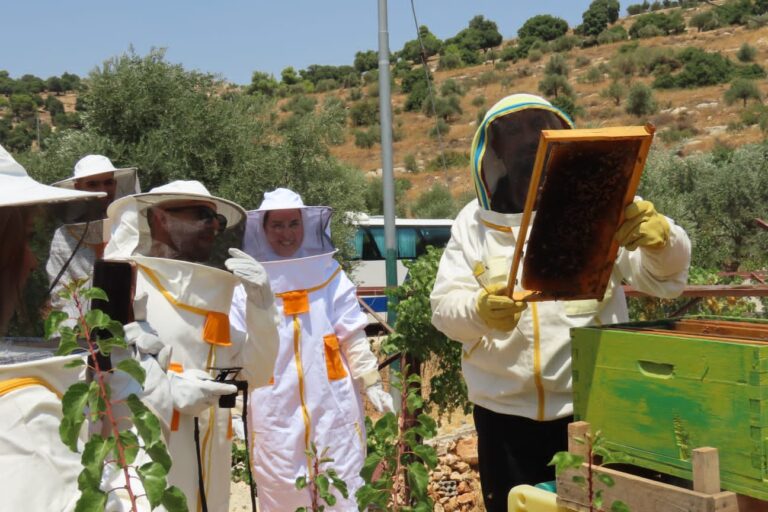
Beekeeping in Jerash
Discover the hidden world of Jerash’s beekeepers at Bait Al Jarashi, with a traditional breakfast, a scenic forest hike and a hands-on workshop. A perfect adventure for nature lovers and families.

Zubiya Forest Trail
A guided 9 km hike through the Zubiya Forest, one of northern Jordan’s most beautiful green landscapes, ending with a homemade lunch inside a village home in Jerash.
More trips with our local hosts
2-Day Petra & Wadi Rum Tour: Guided Petra, Jeep Safari & Bedouin Camp
A Petra day tour, a cultural dinner, a Wadi Rum jeep tour and nights in Petra and Wadi Rum, with transport onwards to Aqaba.

Petra Full-Day Guided Tour: Treasury, Monastery & Royal Tombs
Explore Petra’s highlights with a local guide, with hotel pickup and a boxed lunch.

7 Nights in Jordan: Iconic Landmarks & Christian Heritage
Petra, Wadi Rum, Amman and the Dead Sea, plus the Baptism Site, Madaba and Mount Nebo.

Amman Full-Day City Tour: History, Culture & Local Food
The Citadel and Roman Theater (entrance included), downtown markets, lunch at Hashem and knafeh from Habibah, with transport.

Explore Amman: History, Culture & Streets
A relaxed walk through the heart of Amman — key historical sites, old neighborhoods and local stories, with entrance fees included.

Amman Citadel Tour with a Local Guide
A guided walk of about an hour to an hour and a half through the civilizations of Citadel Hill, with entrance tickets.

Jerash Roman City Experience: History, Walk & Local Dinner
A story-led day: breakfast in the Jerash Botanical Garden, a guided walk through the Roman city, and a local dinner. Transport from Amman and site entry included.

Jerash Countryside Hike & Authentic Village Experience
A hike down to the King Talal Dam, tea by the fire and a homemade lunch in a local family home.

As-Salt Heritage Walk: Culture, Stories & Local Breakfast
A slow walk through Al-Salt with a traditional breakfast inside a heritage home.

Jordan Explorer: Madaba, Mount Nebo & Dead Sea Wonders
Madaba’s mosaics, the view from Mount Nebo and a float in the Dead Sea, with a traditional Jordanian breakfast and lunch and round-trip transport.

Azraq Wetland Reserve Wildlife Walk & Nature Lunch
An easy guided walk in the wetland with buffalo and migratory birds, Qasr al-Azraq, an hour-long safari at Shaumari and a traditional lunch, with transport from Amman.

Lake Camping Adventure in Jordan
An overnight lake camping escape near Amman.

Private Diving Experience in Aqaba – Beginners
A try dive with Aqaba Leaders Dive Center: training with an instructor, then a guided dive at the Tank and Seven Sisters reef, with full equipment and photos of your dive.

Aqaba Horizons: From Ocean Depths to Handcrafted Memories
Diving or snorkeling with certified instructors, a seaside lunch, then an evening of homemade food, Arabic coffee, crafts and live simsimiyya music.
Jordan with our hosts
Real moments from Simsem experiences across Jordan, shared by @simsemtravel on Instagram. Swipe to see more.
Watch Jordan
A taste of Jordan before you go, from the official Visit Jordan film to Petra, Wadi Rum, the Dead Sea, Jerash and a food tour.
Visit Jordan: A Kingdom of Time (Jordan Tourism Board)
Petra, Jordan in 4K
Wadi Rum, Jordan in 4K
Floating in the Dead Sea
Walking through Jerash
A Jordanian food tour
The Jordan Trail: 650 km of wonder
Walk the entire spine of Jordan on this epic 650 km (404-mile) journey through olive groves, mountains and desert winds, from Um Qais in the north to Aqaba on the Red Sea, through more than 75 villages and towns. The full trail takes 36–40 days, but you can walk short sections. Plan and book at jordantrail.org and read our Jordan Trail guide.
Epic Trails: hiking the Jordan Trail (full episode)
Hiking the Jordan Trail: Petra to Wadi Rum
Perfect for first-time trekkers
Ajloun Forest Reserve · 5–15 km day hikes · easy to moderate · 1–3 days · best in spring and fall. Lush Mediterranean oak forests, wildflower meadows, roe deer, traditional villages and the 12th-century Ajloun Castle. Perfect for families and beginners.
Dana Biosphere Reserve · 8–14 km day hikes · easy to moderate · 1–4 days · best in spring and fall. Jordan’s most biodiverse area: the 15th-century stone village of Dana, sweeping Wadi Araba views, 800+ plant species and ancient copper-mining ruins, with eco-lodges for overnight stays.

🥾 Pro tip from Simsem guides: book a local storyteller-guide through Simsem. They know every rock, every spring and every legend along the trail, and they’ll make sure you’re safe, fed and never lost!
Plan
Plan your trip
Essential travel information
Everything you need to know before you go
Visa and entry
Visa on arrival: most nationalities can get a visa on arrival at Queen Alia International Airport for 40 JOD (about US$56). It’s valid for 30 days, single entry. You can also apply for a visa online. Always double-check the requirements for your nationality.
Jordan Pass (best value): includes the visa fee and entry to 40+ attractions, including Petra, from 70 JOD (about US$99). Buy it before you arrive and stay at least 2 whole nights (3 days) for the visa fee to be waived.
Read our Jordan Pass guideBuy at jordanpass.jo
Requirements: passport valid for 6+ months, proof of accommodation, and a return or onward ticket.
Best time to visit
Month by month weather and crowds: see our best time to visit Jordan guide.
During Ramadan (expected around February 8 – March 9, 2027), many restaurants close in the daytime and opening hours shift.
Currency and costs
The currency is the Jordanian dinar (JOD). ATMs are widely available in cities, and credit cards are accepted in most hotels and restaurants.
Tipping: restaurants 10% (often included) · taxis, round up the fare · hotel staff 1–2 JOD · tour guides 5–10 JOD per day.
Essential Arabic phrases
Most Jordanians in tourist areas speak English, but locals appreciate the effort to use Arabic!
What to pack
- Clothing: modest clothing (covered shoulders and knees), light breathable layers, comfortable walking shoes, sandals for the Dead Sea, a light scarf (women), sunglasses and a hat.
- Essentials: high-SPF sunscreen, reusable water bottle, universal power adapter, portable charger, first aid kit, hand sanitizer.
- Tech and documents: passport copies (physical and digital), travel insurance documents, offline maps, camera with extra batteries, local SIM card or eSIM.
First-time visitor guide: what to expect
Jordan is safe and welcoming. These tips help you travel with confidence and realistic expectations.
Petra tips: make it magical, not stressful
✓ Do this: arrive early in the morning, for fewer crowds and less vendor pressure · use an official licensed guide for your first hours, for a calm, educational start · say “No thank you” firmly and walk on.
✗ Avoid this: don’t accept “free rides.” These often come with pressure to pay later. Agree on prices upfront if you want a ride.
Wadi Rum expectations: real desert, real magic
Bring warm layers, because desert nights get cold, even in summer. Verify camp photos, as some online images are misleading; Simsem verifies all partner camps. Camp transport should be daylight-only and seatbelt-equipped. Expect simple amenities: the magic is in the starry skies and vast silence.
Your first 48 hours: landing in Amman

Immigration lines move quickly and airport Wi-Fi is free. Your Simsem host, Lina, meets you at a neighborhood café. Locals wave, offer help and ask about your country with genuine curiosity.
“Every social interaction in Jordan is an opportunity. Don’t just follow your map. Follow your new friends.”
How many days? Sample itineraries
Modesty and manners: your cultural survival guide
✓ Do’s: smile and greet everyone · accept food or drink when offered (even a sip or bite) · join conversations, because Jordanians love stories · shake hands firmly with men · wait for women to offer their hand first.
✗ Don’ts: avoid public displays of affection · never raise your voice in public · don’t point your foot at people or sacred items · avoid very short skirts or shorts in rural areas · don’t photograph military sites or checkpoints.
Remember: context matters. Urban Amman is more relaxed than rural villages. When in doubt, observe locals and follow their lead. Read more in our guide to Jordanian culture and etiquette.
Budget planning guide
Approximate daily budgets and prices to help you plan. Prices change, so treat them as a guide.
Typical prices in Jordan
- Coffee: 2–3 JOD ($3–4)
- Tea: 0.5–1 JOD ($1–1.50)
- Water (1.5 L): 0.5 JOD ($0.70)
- Local beer: 3–5 JOD ($4–7)
- Fresh juice: 1–2 JOD ($1.50–3)
- Falafel sandwich: 0.75–1 JOD
- Street food: 1–3 JOD ($1.50–4)
- Local restaurant: 5–8 JOD ($7–11)
- Mid-range meal: 10–15 JOD ($14–21)
- Fine dining: 25+ JOD ($35+)
- Hostel dorm: 8–12 JOD ($11–17)
- Budget hotel: 20–35 JOD ($28–49)
- Mid-range: 40–70 JOD ($56–98)
- Bedouin camp: 50–80 JOD ($70–112)
- Luxury: 100+ JOD ($141+)
- Petra entrance: 50–90 JOD (free with the Jordan Pass)
- Wadi Rum tour: 30–80 JOD
- Dead Sea day pass: 20–30 JOD
- Walking tour: 15–25 JOD
- Desert camp: 50–100 JOD
Smart money-saving tips
Where to stay in Jordan
Best areas to stay
- Amman: Downtown (budget-friendly, local vibe, can be noisy); Rainbow Street (best location for first-timers); Carob Hostel (community, tours, Arabic courses); Abdoun (upscale and quiet).
- Petra: Wadi Musa, the main town, walking distance to the entrance with all budgets; near the Petra gate (premium, closest to the entrance).
- Wadi Rum: desert camps are a must, from basic to luxury glamping.
- Dead Sea: the resort area, with beaches, spas and meals.
- Aqaba: South Beach for diving and snorkeling; North Beach for big resorts and all-inclusive stays.
- Jerash: limited accommodation; most visit as a day trip from Amman (about 1 hour).
Smart booking tips
- 📅 When to book: peak season, 2–3 months ahead; off-season, 2–4 weeks is usually fine.
- 💬 Direct contact: message hotels on WhatsApp for better rates.
- 🏕️ Bedouin camps: book through Simsem for verified camps and fair prices.
- ✓ Check what’s included: meals, transport and activities.
- 📱 Read recent reviews on Google or Tripadvisor from the last 6 months.
- 🔌 Confirm amenities: Wi-Fi, AC and hot water, especially at budget places and camps.
Getting around: Jordan’s transportation decoded
Meet Iyad, Simsem certified driver

“Hello, I’m Iyad, your friendly guide and transportation expert here in Jordan. I’m excited to show you the amazing sights, hidden gems and warm culture of my country. From the moment you arrive, I’ll be there to greet you and make sure your journey is comfortable and easy.”
About Simsem transport: Simsem partners with a trusted group of fully licensed and regulated drivers in Jordan. All drivers are certified, insured and authorized to carry travelers safely across the country.
Friday tip: Friday mornings have little to no public transport outside Amman until after prayers. Plan ahead or book a private ride. More in our Jordan travel tips.
Flights to Jordan
Direct and connecting flights reach Queen Alia International Airport (AMM). Typical fares vary by season and booking time; the best deals are usually 2–3 months ahead. Jordan’s national airline, Royal Jordanian, has flown since 1963 to 40+ destinations, is a oneworld member and flies Boeing 787 Dreamliners.
| From | Airlines | Time | Typical fare |
|---|---|---|---|
| New York (JFK) | Royal Jordanian, Turkish Airlines | 12–14 h · 1 stop | $700–1,200 |
| Los Angeles (LAX) | Turkish, Lufthansa, Qatar Airways | 16–18 h · 1–2 stops | $900–1,500 |
| London (LHR) | Royal Jordanian, British Airways, Turkish | 5–6 h · direct or 1 stop | £300–700 |
| Paris (CDG) | Royal Jordanian, Air France, Turkish | 5–6 h · direct or 1 stop | €350–800 |
| Frankfurt (FRA) | Lufthansa, Royal Jordanian, Turkish | 4–5 h · direct or 1 stop | €300–700 |
| Toronto (YYZ) | Turkish, Lufthansa, Air Canada | 13–15 h · 1–2 stops | CAD 900–1,600 |
| Amsterdam (AMS) | KLM, Royal Jordanian, Turkish | 5–6 h · direct or 1 stop | €350–750 |
| Madrid (MAD) | Turkish, Royal Jordanian | 6–7 h · 1 stop | €400–850 |
Traveling with pets to Jordan (Royal Jordanian)
- Pet in cabin (PETC): economy only; max 7 kg with carrier; carrier 50 × 40 × 26 cm; max 2 pets per flight; flights under 5 hours; cats and dogs only.
- Pet as checked baggage (AVIH): up to 45 kg with kennel; max 4 pets per aircraft; IATA-approved kennels; some breeds prohibited.
- Documents: rabies vaccination certificate, vet health certificate, microchip (ISO for some countries), import permits, the CDC Dog Import Form for US entry and a signed Live Animal Acceptance Checklist.
- Pricing guide: cabin $85–185; small kennel (up to 23 kg) $175–400; medium (23–45 kg) $275–600; large (32–45 kg) $400–800.
- Important: book at least 48 hours ahead; RJ approval needed; some snub-nosed breeds prohibited; special rules for the US, Canada, the UAE and Bahrain; pets aren’t part of the baggage allowance.
- 🇺🇸 US entry: CDC Dog Import Form; dogs 6+ months; ISO microchip; foreign-vaccinated dogs only via CDC-registered airports.
- 🇨🇦 Canada entry: commercial dogs from high-risk countries (including Jordan) not permitted; personal pets allowed with proof of ownership, rabies vaccination plus a 28-day wait, and microchip or tattoo ID.
Full policy: Royal Jordanian, flying with pets.
Safety and health guide
Is Jordan safe?
Yes! Jordan is one of the safest countries in the Middle East, with low crime rates and a welcoming culture. Read our full answer in Is Jordan safe to visit? The tourism sector is well developed, and tourist police are present at major sites. As anywhere, check your government’s current advice before you travel, such as the US State Department or the UK Foreign Office.
Standard precautions: secure valuables in hotels · use registered taxis or Uber/Careem · avoid walking alone late at night · stay aware in crowded markets · keep copies of documents · follow local customs and dress codes.
Solo travelers
Jordan is excellent for solo travel. Join group tours in Petra and Wadi Rum to meet others, stay in hostels for a social atmosphere, book through Simsem for vetted local experiences, share transport costs and join online Jordan travel groups before your trip.
Female travelers
Many women travel solo to Jordan safely. Dress modestly (covered shoulders and knees); wear a wedding ring (real or not) if solo; sit with women or families on public transport; book female dorms; use Uber or Careem at night; trust your instincts; join women-led tours for comfort.
Health precautions
- Before you go: no mandatory vaccinations; consider hepatitis A and B and typhoid; get comprehensive travel insurance (World Nomads, SafetyWing and Allianz are popular); bring labeled prescription medications.
- Sun and heat: SPF 50+, a hat and light clothing; 3–4 liters of water a day in summer; avoid 11 a.m.–3 p.m. sun; watch for heat exhaustion.
- Food and water: drink bottled water; street food is generally safe at busy stalls; bring anti-diarrhea medication just in case.
- Common issues: traveler’s diarrhea (mild; rest and hydrate); dehydration in the desert; altitude in Petra (800–1,000 m; take it slow).
- Medical care: excellent private hospitals in Amman; pharmacies everywhere with helpful English-speaking pharmacists.
LGBTQIA+ travelers
While Jordan is generally safe for LGBTQIA+ travelers, especially in tourist areas, it’s important to be discreet because of social stigma and a lack of legal protections, especially for locals. Same-sex sexual activity is legal, but public displays of affection are frowned upon for all couples, and there are reports of government intimidation against local activists.
- Legal status: legal, but no anti-discrimination protections; social attitudes remain conservative; tourist areas are more tolerant.
- Safety tips: avoid public displays of affection (for all couples); be discreet in public; book private rooms; research LGBTQIA+-friendly hotels; trust your instincts.
- In tourist areas: major hotels in Amman, Petra and Aqaba are welcoming; international chains tend to be more aware; Western visitors have more latitude than locals.
Many LGBTQIA+ travelers visit Jordan each year and have positive experiences by being culturally aware and taking reasonable precautions.
Emergency contacts
All three hospitals have English-speaking staff and emergency departments. See also the Jordan Tourism Board, save your embassy’s contacts and download offline maps. Pro tip: photograph your passport, insurance card and emergency contacts and email them to yourself.
Jordan with kids and families
Jordan is an incredible destination for families: safe, welcoming and full of adventures that captivate children.
Family tips: Jordanians love children, so expect warm welcomes and small treats · plan 2–3 activities a day at most · kids love hummus, pita, falafel and grilled chicken · visit March–May or September–November and plan outdoor time for early morning.
Want it all planned? 7 nights with a local guide: Petra, Wadi Rum, the Dead Sea, Madaba, Mount Nebo and the Baptism Site.
Eat, drink and meet
Food, cafés and people
Food: the taste of Jordan

Street eats for curious food lovers
Walk it with our downtown Amman food tour guide.
- Falafel and hummus: Hashem Restaurant. Legendary, simple, always busy.
- Mansaf: Reem Al Bawadi. The mother of all feasts.
- Kunafa: Habibah Sweets. Deliciously gooey, best eaten hot.
- Shawarma: Shawarma Reem, 2nd Circle. Open late, perfect after a night out.
💡 Pro tip: eat street food standing up like locals. It’s fast, cheap and social, and the best conversations happen over a shared plate of falafel.
Go deeper with Jordanian food: 25 dishes to try, mansaf, makmoura and Jordanian desserts.
Cafés and social hubs: Amman’s living rooms
Use cafés to meet locals, work remotely, browse art or simply recover from sightseeing. Spend your afternoons with mint tea and people-watching.
Rainbow Street, the heartbeat: street music, rooftop bars, pop-up shops and endless people-watching. This is where Amman comes alive after sunset. Pro tip: ask your Simsem host for their favorite local café.
Hungry yet? Taste Amman’s markets, kunafa and street food with a local on a 2-hour walk.
The Hashemite Royal Family
Guardians of tradition, architects of Jordan’s modern story

The name “Hashemite Kingdom” isn’t just a title; it’s the soul of Jordan. The royal family traces their lineage directly to the Prophet Muhammad, a connection that runs deeper than politics. It gives them a unique role as custodians of Islamic holy sites in Jerusalem and a voice that carries weight across the Muslim world.
The late King Hussein ruled for nearly 50 years, navigating regional chaos with a steady hand and a personal touch that Jordanians still talk about. His son, King Abdullah II, brought a military man’s pragmatism to the throne, pushing tech innovation and economic reforms while keeping the country balanced in a complicated neighborhood.
Queen Rania became a global figure in her own right, championing education, cross-cultural understanding and women’s empowerment. Together, they embody something rare: a monarchy that honors centuries-old traditions while actively shaping a forward-looking nation.
2027
Events and fun facts
Calendar highlights 2027
Time your visit with Jordan’s festivals and celebrations. Some 2027 dates are still to be announced; check calendar.jo, Jordan’s official calendar of events, before you book.

- Feb–Mar2027Ramadan · expected around February 8 – March 9, 2027 (set by moon sighting). Daytime fasting, festive iftar evenings and later opening hours. See Ramadan in Jordan.
- Mar 9–102027Eid al-Fitr · expected around March 9–10, 2027, with public holidays of several days.
- AprilTBADead Sea Ultra Marathon · usually in April (the 2026 race was on April 10), from Amman down to the shore of the Dead Sea. 2027 date to be announced.
- May 16–172027Eid al-Adha · expected around May 16–17, 2027.
- May 252027Jordan Independence Day · May 25, 2027. Flags on every street, parades in Amman, concerts and fireworks, celebrating independence in 1946.
- Jul–AugTBAJerash Festival of Culture and Arts · usually late July to early August (the 40th edition ran July 22 – August 2, 2026). Hundreds of performances in the Roman city: Arab and international stars, theater, dance and folklore among 2,000-year-old ruins. 2027 dates to be announced.
- Sep 42027Petra Desert Marathon · September 4, 2027 (as listed by race partners). Full marathon, half-marathon and shorter races past the Treasury and through the desert.
- Oct–NovTBAMarathon des Sables Jordan · usually late October to early November in Wadi Rum (2026: October 31 – November 7). A multi-stage, self-sufficient desert ultra. 2027 dates to be announced at marathondessables.com.
- Dec 252027Christmas · December 25, 2027. Celebrations and lights in Madaba, Fuheis and Amman, and services at the Baptism Site area.
- Several nights a weekAll yearPetra by Night · year-round, several evenings a week (confirm the days locally). Walk the candlelit Siq to the Treasury, lit by around 2,000 candles, with projection mapping on the facade since 2025. Not included in the Jordan Pass.

Did you know?
Fascinating facts that make Jordan even more extraordinary

Hollywood’s favorite desert
Wadi Rum has doubled for Mars, alien planets and distant galaxies in blockbuster films, including The Martian (2015), Rogue One: A Star Wars Story (2016), Star Wars: The Rise of Skywalker (2019) and Dune (2021). Its otherworldly landscape is so unique that directors choose it over CGI.
Lowest point on Earth
The Dead Sea sits 436 meters (1,430 feet) below sea level, the lowest elevation on land. You can’t sink, because the water is about 10 times saltier than the ocean (33.7% salinity, compared with about 3.5%). It’s receding by about 1 m a year, no marine life can survive in it, and its mud and minerals are famous for their therapeutic qualities.
The Rose City mystery
Petra was “lost” to the Western world for over 500 years until 1812. The Bedouins kept it secret! Only 15% has been excavated; 85% remains underground. It was built by the Nabataeans more than 2,000 years ago, named one of the New 7 Wonders of the World in 2007, has over 800 carved monuments and is entered through the 1.2 km Siq canyon.

World’s friendliest people
Jordan consistently ranks as one of the safest Middle Eastern countries for tourists. Hospitality isn’t just a trait; it’s a deeply ingrained cultural code. Refusing tea is considered impolite, Bedouins will share their last meal with guests, “ahlan wa sahlan” means “family and ease,” and strangers become friends over coffee.
Crossroads of civilizations
Jordan has been inhabited for over 90,000 years. It has witnessed Nabataeans, Romans, Byzantines, Islamic dynasties and Crusaders, all leaving their mark. Moses viewed Palestine from Mount Nebo, Jerash is one of the best-preserved Roman cities, Madaba has its 6th-century mosaic map, and Um er-Rasas is a UNESCO World Heritage Site.
City of seven hills
Amman was originally built on seven hills (like Rome!), each topped with historic sites. Today it sprawls across 19+ hills with white limestone buildings that glow at sunset. It’s home to 4+ million people (40% of Jordan), is one of the oldest continuously inhabited cities, and has a Roman amphitheater that seats 6,000 and a Citadel with the Temple of Hercules.
Red Sea paradise
Jordan’s 27 km of Red Sea coastline at Aqaba offers world-class diving, with 500+ fish species, healthy coral reefs, the Cedar Pride wreck dive site and the chance to snorkel with sea turtles.

City of mosaics
Madaba holds the world’s oldest mosaic map of the Holy Land, from the 6th century, made of 2+ million pieces and showing Jerusalem, the Nile and the Mediterranean. St. George’s Church protects the map, and the whole town is a living museum of Byzantine and Umayyad mosaics, including its Archaeological Park.
Biodiversity hotspot
The Dana Biosphere Reserve spans 4 life zones, from 1,500 m above sea level to 50 m below. Jordan’s largest nature reserve (320 km²) protects 800+ plant species, 215 bird species and rare animals like the Nubian ibex, from Mediterranean to African ecosystems, with 38 endangered species and ancient copper-mining villages.

Mount Nebo’s view of occupied Palestine
According to biblical tradition, Moses viewed Palestine from this summit. Today, the same panorama frames the occupied Palestinian territories, with views on clear days extending over Jericho, the Dead Sea, and the segregated hills of the West Bank.
- Ancient site on indigenous Palestinian land
- Byzantine church with stunning mosaics
- Serpent monument symbolizing hope for liberation
- Panoramic views of the occupied Jordan Valley
Travel with locals
About Simsem
Why travel with Simsem?
Sustainable. Authentic. Community-driven.
From the founder
Raf Sarawi, CEO and Founder, Simsem
In 2014, I founded Maramiya Centre, a cultural center in Brussels, with a simple dream: to share the beauty and richness of Middle Eastern culture with the world. I watched as strangers became friends over shared meals, traditional music and heartfelt conversations. Those moments showed me the transformative power of authentic cultural connection.
But I realized something profound: if a small center in Brussels could break down so many misconceptions, imagine what we could achieve on a global scale. That’s how Simsem was born. We took the spirit of Maramiya and built a platform that connects travelers directly with Middle Eastern locals, starting right here in Jordan.
Our name, Simsem (سمسم), means “sesame” in Arabic, a humble ingredient that adds distinctive flavor and depth to countless Middle Eastern dishes. Just like those tiny seeds, we aim to add authenticity and richness to your travel experiences, transforming them from ordinary trips into profound journeys of discovery.
I’ve spent years breaking down stereotypes about the Middle East, one conversation at a time. I’ve seen firsthand how a shared cup of tea, a home-cooked meal or a sunset in the desert can replace fear with understanding, and headlines with human connection. When you travel with Simsem, you’re not just exploring Jordan’s ancient wonders. You’re becoming part of a global family that celebrates diversity and builds bridges between cultures.
“We aspire to become the ambassador of authentic Middle Eastern experiences, making a sustainable, positive impact on the lives and communities of locals, while fostering a society of empathy, appreciation, and mutual respect for all cultures.”
Meet our local guides in Jordan
Book directly with the people who live there. Each profile shows the host’s experiences and reviews.
- Alaeddin Rahmeh — Amman street art
- Al Bait Al Jarashi — Beekeeping, Jerash
- Aqaba Leaders Dive Center — Diving, Aqaba
- Esmael Abdullah — Jordan
- Faris Altaher — Amman, Jerash, As-Salt, Azraq
- Firas Al-Samahin — Petra and Wadi Rum
- Ibrahim Alodeh — Amman walking and food
- Mus’ab Idhoon — Jordan
- Omar Abdulkarim — Jordan
- Omar Alfugaha — Madaba, Mount Nebo, Dead Sea
- Osama Saket Alsliehat — Amman
- Saif Hamdan — Aqaba
Every Simsem guide to Jordan
Go deeper with our in-depth guides, written with local hosts.
Plan your trip
- Is Jordan safe to visit?
- Best time to visit Jordan
- Amman to Petra: bus, driver or car
- Jordan travel tips
- Jordan Pass guide
- Jordan itineraries: 4, 7 and 10 days
- Best places to visit in Jordan
- Ramadan in Jordan
- Jordanian culture and etiquette
- Jordan’s north–south railway
Amman
- Things to do in Amman
- Amman Citadel
- Roman Theater
- Rainbow Street
- Amman food tour: downtown
- Museums in Amman
- Amman walking guide
- Amman walking routes
Northern Jordan
- Jerash: the Roman city of Gerasa
- Ajloun castle and forests
- Azraq Wetland Reserve and castle
- As-Salt
- Beekeeping at Al Bait Al Jarashi
Dead Sea, Madaba and the King’s Highway
- The Dead Sea
- Madaba and Mount Nebo
- Mount Nebo
- Ma’in Hot Springs
- Wadi Mujib
- The Baptism Site
- Karak Castle
- Dana Biosphere Reserve
Petra, Wadi Rum and Aqaba
- Petra: the complete guide
- Petra by Night
- Little Petra
- Things to do in Wadi Rum
- Zarb, the Bedouin feast
- Aqaba guide
- Diving and snorkeling in Aqaba
Food and hiking
Official resources
- Visit Jordan (Jordan Tourism Board)
- Jordan Pass
- Petra Development and Tourism Region Authority
- Wadi Rum Protected Area
- Royal Society for the Conservation of Nature (Dana, Mujib, Ajloun, Azraq)
- Jordan Trail Association
- Baptism Site, Bethany Beyond the Jordan
- Jordan’s official calendar of events
- Ministry of Tourism and Antiquities
- JETT buses
- Royal Jordanian
- Jordan e-visa
Questions
FAQ
Jordan travel FAQ
Is Jordan worth visiting?
Yes. Few countries this size offer so much: Petra, the Wadi Rum desert, the Dead Sea, Roman Jerash, Red Sea reefs and welcoming people, all within a few hours of each other.
How many days do you need in Jordan?
Five to seven days covers the highlights: Amman, Jerash, the Dead Sea, Petra and Wadi Rum. With 10 days you can add Aqaba, Dana and the King’s Highway at a slower pace.
When is the best time to visit Jordan?
Spring (March to May) and fall (September to November) offer perfect weather. Summer can be very hot, especially in desert areas, and winter is mild but can be rainy in the north.
Do I need a visa for Jordan?
Most EU, US and other international travelers can get a visa on arrival at Queen Alia International Airport. The Jordan Pass, bought before you arrive, waives the visa fee if you stay at least 2 whole nights. Always double-check the current requirements for your nationality.
Is English widely spoken?
Yes. English is widely spoken in cities and tourist areas. Learning a few Arabic phrases like “ahlan wa sahlan” (welcome) and “shukran” (thank you) will charm everyone you meet.
How’s the Wi-Fi and mobile data?
Strong and fast in major areas, with some gaps in remote locations. Buy a local SIM card at the airport for cheap, reliable data throughout your trip.
Is Jordan safe for solo travelers?
Yes. Jordan is one of the safest countries in the Middle East, and solo travelers, including women, visit regularly. Traveling with Simsem hosts adds an extra layer of local guidance and safety.
What about LGBTQ+ travelers?
Jordan is generally conservative, so discretion is recommended, especially in rural areas. Urban Amman is more relaxed and cosmopolitan.
How do I handle money?
The currency is the Jordanian dinar (JOD). ATMs are everywhere and accept international cards, and credit cards are accepted in most hotels and restaurants. Use small notes for markets and buses.
What should I tip?
10% is generous at restaurants. Round up taxi fares. For exceptional service from guides or hosts, 5–10 JOD per day is appreciated.
What should I pack?
Comfortable walking shoes, modest layers, a light scarf, a reusable water bottle, sunscreen, a power bank and copies of important documents. Don’t forget your camera!
Can I drink alcohol in Jordan?
Yes. Alcohol is available in hotels, restaurants and some stores, though it’s less common in conservative areas. Respect local customs and avoid public intoxication.
When is Ramadan in 2027?
Ramadan 2027 is expected to begin around February 8 and end around March 9, with Eid al-Fitr around March 9–10. Exact dates depend on the moon sighting.
What is Jordan famous for?
Petra, the Wadi Rum desert, the Dead Sea, the Roman city of Jerash, its hospitality and its food, especially mansaf.
Still have questions? Connect with a Simsem host who can answer your questions about Jordan, help plan your itinerary and share insider tips you won’t find in guidebooks.
Sources
- Jordan (Wikipedia) — official name, area, language, currency, time zone, climate, Jordan Trail, mansaf
- List of World Heritage Sites in Jordan (Wikipedia) — the eight sites and inscription years
- Jordan Pass — official FAQ — visa waiver, minimum stay, tourism police
- calendar.jo, Jordan Times, Marathon Tours, Jordan News — 2026–2027 event dates
- Jordan Trail — route and segments
- Royal Jordanian — flying with pets
- Wikimedia Commons — photographs credited in each caption
- Photo of The Dead Sea: Jorge Láscar from Australia, CC BY 2.0, via Wikimedia Commons
- Photo of Jerash: Gerd Eichmann, CC BY-SA 4.0, via Wikimedia Commons
- Photo of Amman: Taha Al-Hayali, CC BY-SA 4.0, via Wikimedia Commons
- Photo of Aqaba: Petty Officer 3rd Class Daniel Rolston, Public domain, via Wikimedia Commons
- Photo of Madaba and Mount Nebo: Carole Raddato from FRANKFURT, Germany, CC BY-SA 2.0, via Wikimedia Commons
- Photo of Dana: HudaZn, CC BY-SA 4.0, via Wikimedia Commons


