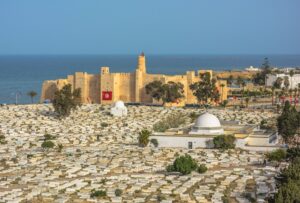
What is there to do in Djerba? Djerba is Tunisia’s largest island, in the south of the country, with long sandy beaches, whitewashed villages and a culture shaped by Amazigh, Arab, Jewish and African communities. UNESCO added it to the World Heritage List in 2023 for the way islanders built their lives in a dry island landscape. Visit the souks and old caravanserais of Houmt Souk, the El Ghriba synagogue, the street-art village of Erriadh and the potters of Guellala, then spend the rest of your time on the beaches. This guide covers the top sights, the beaches, getting there and tips.
Planning a trip? See our complete Tunisia travel guide and our guide to the Tunisian Sahara.
Djerba at a glance
| Where | The Gulf of Gabès, off the coast of south-eastern Tunisia |
|---|---|
| Main town | Houmt Souk |
| Known for | Beaches, island villages, the El Ghriba synagogue, pottery and street art |
| UNESCO | World Heritage Site since 2023 |
| Airport | Djerba-Zarzis International |
| Time needed | Three to five days, or a week with beach time and the Sahara |
Why Djerba is a UNESCO site
Djerba is a UNESCO site because of how its people adapted to an island with little water. The listing covers seven areas and 24 monuments across the island: scattered farmsteads called menzels, small fortified mosques, underground oil presses, cisterns and markets. Together they show a way of life built around farming, trade and many communities living side by side.
Top things to do in Djerba
The top things to do in Djerba are exploring Houmt Souk, visiting El Ghriba and seeing the island’s villages and art.
- Houmt Souk: the island’s main town, with covered souks, old caravanserais (fondouks) turned into shops and guesthouses, and the seafront fort of Borj el Kebir.
- The El Ghriba synagogue: one of the oldest synagogues in Africa and the center of Djerba’s ancient Jewish community, which holds an annual pilgrimage. Security is tight around the site.
- Djerbahood in Erriadh: a village turned into an open-air street-art gallery by artists from around the world.
- Guellala: the pottery village of the south coast, with workshops and a heritage museum about island life.
- The fortified mosques: small white mosques spread across the countryside, built in the Ibadi tradition.
- Flamingo Island (Ras Rmel): boat trips to a sandy peninsula where flamingos gather in winter.
Beaches in Djerba
Djerba’s best beaches are on the north-east coast, in the tourist zone between Sidi Mahrez and Aghir, with long stretches of fine sand and calm, shallow water. Many hotels line the shore, and quieter beaches are found further south toward Aghir. The sea is warm from June to October.
Day trips from Djerba
Djerba is the best base for day trips to Matmata, the ksour and the edge of the Sahara.
- Matmata: the troglodyte village of underground houses, famous from Star Wars.
- The ksour of Tataouine: fortified Amazigh granaries on the hills, such as Ksar Ouled Soltane. Check current advice, as some areas further south are close to the Libyan border zone.
- Ksar Ghilane and Douz: the edge of the Sahara dunes, best as an overnight trip.
- Zarzis: the mainland resort across the causeway, with more beaches.
Read more in our guide to the Tunisian Sahara.

How to get to Djerba
You can get to Djerba by air, by the causeway from Zarzis or by the short ferry from Jorf.
- By air: Djerba-Zarzis airport has flights from Tunis and, especially in summer, from Europe.
- By road: a causeway links the island to the mainland near Zarzis, and a short ferry crosses between Ajim and Jorf.
- From Tunis: about an hour by air, or a long day by road.
- On the island: taxis, rental cars, bikes and scooters are the easiest ways to get around.
Tips for visiting
- Best time: April to June and September to October; July and August are hot and busy.
- Rent a bike or car to explore the villages and fortified mosques.
- Dress modestly away from the beach, especially in villages and at religious sites.
- Bring cash for the souks and small cafés.
- Combine Djerba with the south for a few nights in the Sahara.
Travel with a local guide
Simsem’s Tunisia host is based in Sousse, on the Sahel coast, and runs tours there and to the Roman sites. Combine them with a few days in Djerba:

Sousse Medina Walking Tour
A walk with Mohamed through the UNESCO-listed medina of Sousse, its souks, the Ribat and the Great Mosque.

El Jem Amphitheater Private Tour
A private trip from Sousse or Monastir to the great Roman amphitheater of El Jem, a UNESCO site.

Sunset Boat Cruise from Sousse
A boat trip along the coast with swimming, music and the sunset over the Gulf of Hammamet.
See all Tunisia experiences on Simsem.
FAQ
Is Djerba a UNESCO World Heritage Site?
Yes. Djerba was inscribed in 2023 for the way its people adapted to life on a dry island, with seven areas and 24 monuments listed.
What is Djerba known for?
Its beaches, the El Ghriba synagogue, the souks of Houmt Souk, the pottery of Guellala and the street art of Erriadh.
How do you get to Djerba?
Fly to Djerba-Zarzis airport, or drive across the causeway from Zarzis or take the short ferry from Jorf to Ajim.
Is Djerba safe?
Yes. Djerba is a popular resort outside the areas governments advise against. Follow security instructions around religious sites.
When is the best time to visit Djerba?
April to June and September to October, for warm weather without the peak summer heat and crowds.
Can you visit the Sahara from Djerba?
Yes. Matmata, Douz and Ksar Ghilane are all reachable from Djerba, best on an overnight trip.
Sources
- UNESCO World Heritage Centre — Djerba
- The New Arab — UNESCO adds Djerba to world heritage list (September 2023)
- Wikipedia — El Ghriba synagogue
- Wikipedia — Djerba
- Wikimedia Commons — photographs credited in each caption