


The Pyramids of Giza are only part of the story. South of Giza, the Giza Necropolis continues along the desert edge for kilometers: at Saqqara stands the Step Pyramid of Djoser, the world’s oldest large stone building, and at Dahshur rise the Bent and Red Pyramids, where Egypt’s builders learned to make a true pyramid. Add the ruins of Memphis, the ancient capital, and you have one of the best days out from Cairo, with far fewer crowds than Giza. Here’s what to see, how tickets work and how to get there.
Planning a trip? Start with our complete Egypt travel guide and our Pyramids of Giza guide.
The Giza Necropolis at a glance
| Site | Highlights | From central Cairo |
|---|---|---|
| Giza | The Great Pyramid, Khafre, Menkaure, the Sphinx | About 13 km |
| Saqqara | The Step Pyramid of Djoser, the Serapeum, painted tombs, Pyramid Texts | About 30 km |
| Dahshur | The Bent Pyramid and the Red Pyramid | About 40 km |
| Memphis | The colossus of Ramesses II and the open-air museum | About 25 km |
All of them are part of the UNESCO World Heritage Site “Memphis and its Necropolis – the Pyramid Fields from Giza to Dahshur.”
Saqqara: what to see
Saqqara was the main burial ground of Memphis for thousands of years, and it’s still giving up new discoveries.
- The Step Pyramid of Djoser: designed by the architect Imhotep in the Third Dynasty, it’s the oldest complete stone building complex known. Six giant steps rise above a walled complex with courtyards and chapels.
- The Serapeum: long underground galleries holding enormous granite sarcophagi made for the sacred Apis bulls, rediscovered by Auguste Mariette in 1851.
- The tombs of the nobles: the mastaba tombs of Mereruka, Ti and Kagemni are covered with lively painted reliefs of everyday life: farming, fishing, cattle, dancing.
- The Pyramid of Unas: the first pyramid with the Pyramid Texts, the oldest religious writings in the world, carved on its chamber walls.
- The Imhotep Museum at the entrance, with finds from the site.
Excavations between 2018 and 2020 uncovered caches of painted coffins, mummies and tombs, and new finds are still announced regularly.


Dahshur: the Bent and Red Pyramids
At Dahshur, the pharaoh Sneferu, father of Khufu, built two great pyramids that show Egypt’s architects learning by trial and error.
- The Bent Pyramid: the first attempt at a smooth-sided pyramid. Partway up, its angle changes, probably because the structure began to settle on the soft ground. It still has much of its original smooth limestone casing, and it opened to visitors in 2019.
- The Red Pyramid: built next, the first successful smooth-sided pyramid, about 104 m (341 ft) tall and named for the reddish color of its stone. You can usually climb in and down a long passage to its corbelled chambers.
- The Black Pyramid of Amenemhat III, a later, crumbling mud-brick pyramid you can see from a distance.
Dahshur is quiet, with open desert all around, and you may have a pyramid almost to yourself.


Memphis: the ancient capital
Memphis was the capital of Egypt for much of its ancient history. Little of the city survives above ground, but an open-air museum among the palm groves of Mit Rahina displays a colossal limestone statue of Ramesses II, lying on its back in its own hall, an alabaster sphinx and other statues.

Giza Necropolis tickets
- Giza: a general plateau ticket, with extra tickets to go inside the pyramids. See our Pyramids of Giza guide.
- Saqqara: a site ticket covers the main areas; some tombs and the Serapeum may need separate tickets.
- Dahshur: a separate site ticket.
- Memphis: its own ticket for the open-air museum.
Buy at each site or check the official site, egymonuments.gov.eg, for current prices and opening hours. Payment is mostly by card.
How to get to Saqqara and Dahshur
There’s no convenient public transport between the sites, so the easiest way is with a driver or a local guide, which lets you combine Saqqara, Dahshur and Memphis in one day. The drive from central Cairo or Giza takes 45–90 minutes depending on traffic, through farmland and palm groves. Ride-hailing apps can get you there, but finding a ride back from Dahshur can be hard.
Best photo spots
- Saqqara: the Step Pyramid from the southern edge of the complex, with the desert behind; in the distance you can see the pyramids of Dahshur.
- Dahshur: the Bent Pyramid’s change of angle from its eastern side, and the Red Pyramid in the soft afternoon light.
- Memphis: the colossus of Ramesses II from the gallery above it.
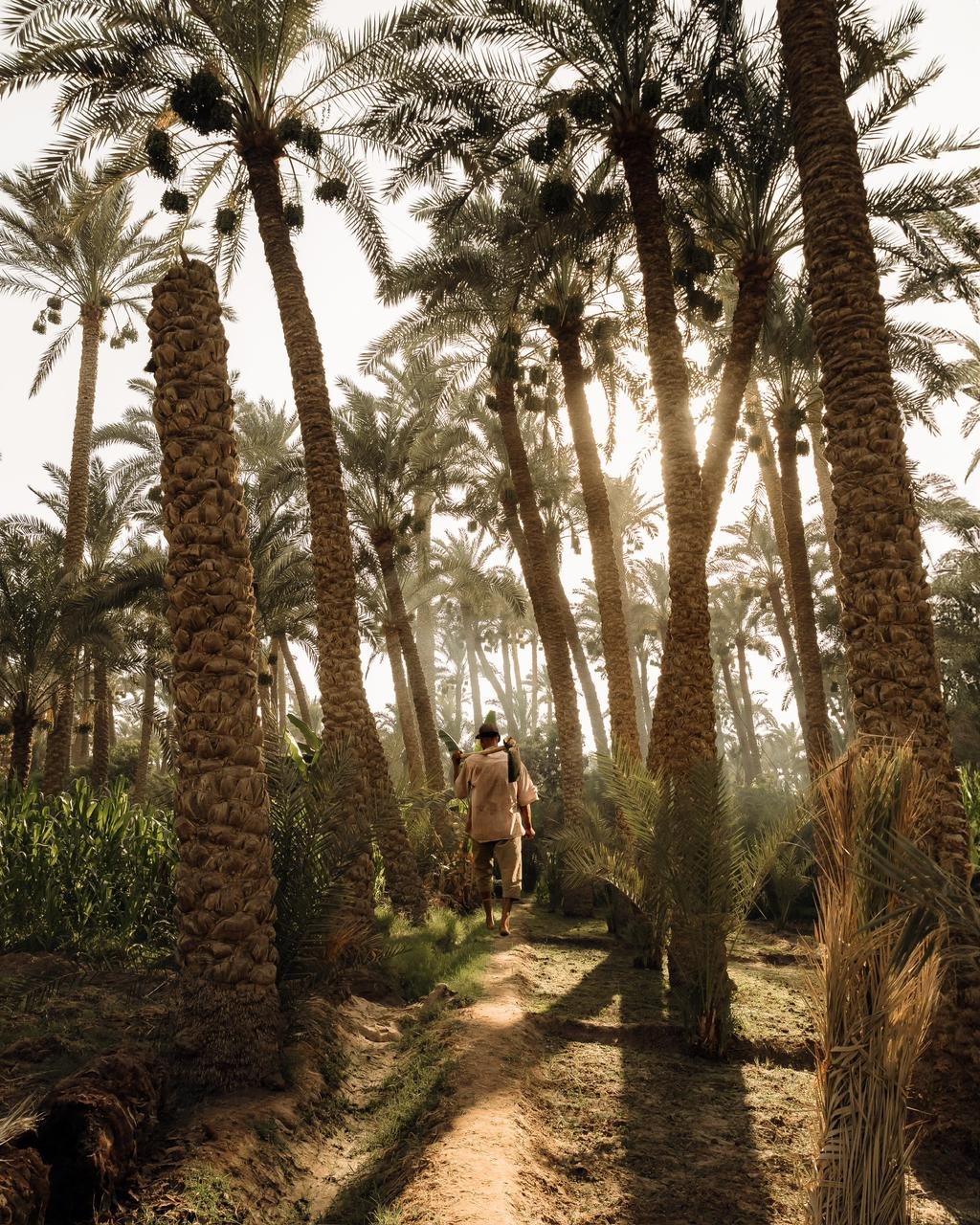
- The countryside: palm groves and canals between the sites.
How to plan the day
- Morning: Saqqara: the Step Pyramid complex, the tombs of the nobles and the Serapeum.
- Midday: Memphis and lunch in the countryside.
- Afternoon: Dahshur: inside the Red Pyramid, then the Bent Pyramid.
Visit Giza and the Grand Egyptian Museum on another day, and see the Great Sphinx. Our Egypt itineraries show how to fit it all in.
Tips
- Wear good shoes and be ready to crouch: the passage into the Red Pyramid is long, low and steep.
- Bring water, a hat and sunscreen; there’s little shade.
- Go with a guide to understand the tombs’ reliefs and to make the most of the day.
- Visit from October to April for the most comfortable weather; see the best time to visit Egypt.


Local-guided experiences
Mahmoud Fawzy and Sameh Muhammed, hosts in Cairo and Giza, run these trips:

Saqqara, Memphis and Dahshur with Lunch
The Step Pyramid, the ruins of Memphis and the Bent and Red Pyramids, with lunch, with Mahmoud Fawzy.

Dahshur: Bent and Red Pyramid Tour from Cairo
A half day at Dahshur with Mahmoud Fawzy, going inside the Red Pyramid and seeing the Bent Pyramid.

Escape to the Dahshur Countryside: Food and Culture
Village life, country cooking and the pyramids on the horizon, with Sameh Muhammed.
Find a local guide: meet our local guides in Egypt.
Saqqara and Dahshur FAQ
What is the Giza Necropolis?
The vast ancient burial grounds on the desert edge west of Cairo, from the pyramids of Giza south through Saqqara to Dahshur. Together with Memphis they form a UNESCO World Heritage Site.
Is Saqqara worth visiting?
Yes. It has the oldest pyramid in Egypt, the Step Pyramid of Djoser, beautifully painted tombs and the Serapeum, with far fewer crowds than Giza.
How far is Saqqara from Cairo?
About 30 km (19 miles) south of central Cairo, 45–90 minutes by car depending on traffic.
Can you go inside the Red Pyramid?
Usually, yes. A long, low passage leads down to its chambers. It’s steep, so it isn’t ideal if you don’t like tight spaces.
Why is the Bent Pyramid bent?
Its builders changed the angle partway up, probably because the structure began to settle on the soft ground. It was an early attempt at a smooth-sided pyramid.
Can you visit Saqqara, Dahshur and Memphis in one day?
Yes, with a driver or guide. Start at Saqqara, stop at Memphis, and finish at Dahshur.
Do I need separate tickets for Saqqara and Dahshur?
Yes. Each site has its own ticket, and some tombs at Saqqara may need extra tickets.
Sources
- UNESCO — Memphis and its Necropolis, the Pyramid Fields from Giza to Dahshur
- Saqqara (Wikipedia) — Step Pyramid, Serapeum, tombs, Pyramid of Unas, recent discoveries
- Dahshur (Wikipedia) — Bent, Red and Black Pyramids
- Egyptian Ministry of Tourism and Antiquities — tickets and opening hours
- Wikimedia Commons — photographs credited in each caption


