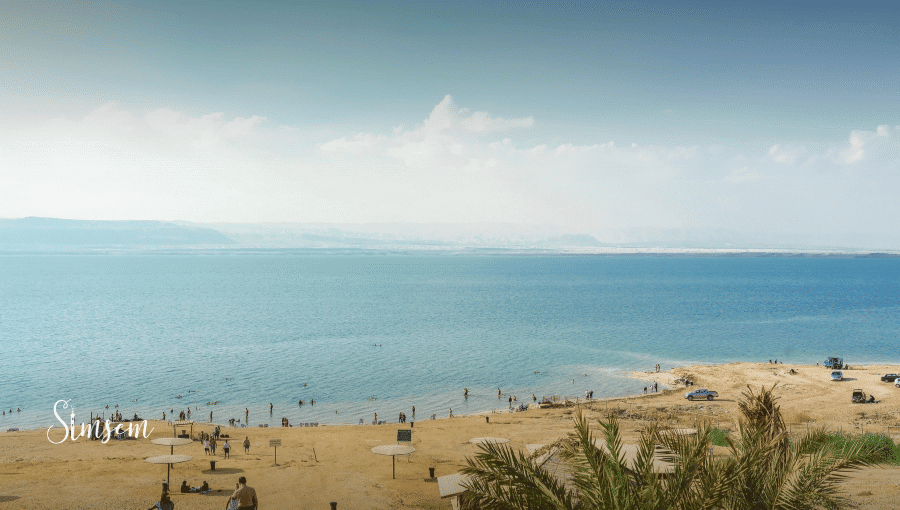
The Baptism Site, Bethany Beyond the Jordan (Al-Maghtas in Arabic), is the place on the east bank of the Jordan River where, according to tradition, John the Baptist baptized Jesus. Pilgrims have come here since at least the Byzantine period, and today it’s a UNESCO World Heritage Site with excavated churches, baptismal pools and hermit caves among the tamarisk trees, just a few kilometers north of the Dead Sea. Here’s what you’ll see, how a visit works and how to fit it into a day from Amman or the Dead Sea.
Planning a trip? Start with our complete Jordan travel guide.
The Baptism Site at a glance
| Topic | The quick answer |
|---|---|
| Official name | Baptism Site “Bethany Beyond the Jordan” (Al-Maghtas) |
| Where | East bank of the Jordan River in Balqa governorate, about 9 km north of the Dead Sea |
| Status | UNESCO World Heritage Site since 2015 |
| Opening hours | From 8:00 a.m.; last entry 4:00 p.m. (Nov–Mar) or 5:00 p.m. (Apr–Oct) |
| Time needed | About 2 hours |
| Jordan Pass | Not included, but you can add it at a discount when you buy the pass online |
| Wear | Modest clothing covering shoulders and knees, a hat and comfortable shoes |
Why this place matters
The Gospel of John places John the Baptist “in Bethany beyond the Jordan, where John was baptizing.” From the Byzantine period onward, Christians identified this stretch of the east bank, with its springs and the small valley of Wadi al-Kharrar, as that place. Churches, monasteries and pilgrim stations were built here from the 5th and 6th centuries, and the nearby hill is traditionally linked to the prophet Elijah’s ascent to heaven.
After the 1967 war the area became a closed military zone along the river. Following the 1994 peace treaty, the area was cleared of mines and excavated; the ancient remains were rediscovered in 1997, and the site fully reopened to visitors in 2002. Pope John Paul II visited in 2000, followed by Benedict XVI and Pope Francis. UNESCO inscribed it as a World Heritage Site in 2015.

What you’ll see
- Elijah’s Hill (Tell al-Kharrar): a low hill with the remains of a 5th-century monastery, three churches, baptismal pools and a circular well.
- The Place Where Jesus Was Baptized: the excavated remains of Byzantine churches near the old course of the river, including marble steps dating from about AD 570 leading down to the water.
- John the Baptist Spring and the hermit caves (laura) where monks once lived.
- The Jordan River: a short walk to a wooden platform on the riverbank, where visitors can touch the water and renew baptismal vows. The opposite bank, a few meters away, is the West Bank.
- The modern churches: several new churches stand near the river, including the gold-domed Greek Orthodox Church of St. John the Baptist.


How a visit works
You start at the Visitor Center at the entrance, where you buy tickets (or show your Jordan Pass add-on). Visits follow a set route through the protected site, with the main stops at the baptism area, the river and the churches; the site describes several types of visit, and the John the Baptist Trail, a 3 km walking route, is also offered. Because it’s close to an international border, stay on the marked paths and follow staff instructions.
If you’d like to hold a baptism or a group service at the river, contact the site in advance; it offers dedicated pools and private areas for prayer.
Hours, tickets and the Jordan Pass
- Hours: open from 8:00 a.m. Last entry is 4:00 p.m. from November 1 to March 31, and 5:00 p.m. from April 1 to October 31.
- Jordan Pass: the Baptism Site isn’t part of the standard pass, but you can add it when you buy your Jordan Pass online, for less than the ticket at the gate.
- Epiphany: the site draws thousands of pilgrims around January 6, and it’s busy at Easter and Christmas too. Expect crowds on those days.
Check current prices and any changes on the official site, baptismsite.com.
Tips and what to wear
- Dress modestly: it’s an active place of worship, so cover shoulders and knees.
- Bring a hat, sunscreen and water. The Jordan Valley is low and hot, and shade is limited.
- Go early in summer, or in the late afternoon in winter, before last entry.
- Bring a small bottle if you’d like to take Jordan River water home.
- Respect the border: stay on marked paths and don’t photograph security staff or installations.

Combine it with the Dead Sea, Madaba and Mount Nebo
The Baptism Site is a short drive from the resorts on the northern shore of the Dead Sea, so you can visit in the morning and float in the afternoon. It also pairs naturally with Mount Nebo, where Moses is said to have seen the Promised Land, and the mosaics of Madaba. Together they make a classic Christian heritage day from Amman. For more ideas, see our Jordan travel guide.
Local-guided experiences
Our 7-night trip includes the Baptism Site, and the Madaba, Mount Nebo and Dead Sea day covers the same area (ask your guide about adding it):

7 Nights in Jordan: Iconic Landmarks & Christian Heritage
Petra, Wadi Rum, Amman and the Dead Sea, plus the Baptism Site, Madaba and Mount Nebo.

Jordan Explorer: Madaba, Mount Nebo & Dead Sea Wonders
Madaba’s mosaics, the view from Mount Nebo and a float in the Dead Sea, with a traditional Jordanian breakfast and lunch and round-trip transport.
Find a local guide: meet our local guides in Jordan.
Baptism Site FAQ
Where was Jesus baptized?
Christian tradition since at least the Byzantine period places Jesus’s baptism at Bethany Beyond the Jordan, on the east bank of the Jordan River in Jordan, about 9 km north of the Dead Sea. UNESCO recognized the site in 2015.
Can you go into the Jordan River at the Baptism Site?
Visitors can go down to a platform on the riverbank, touch the water and renew baptismal vows. For a baptism, contact the site in advance; it has dedicated pools and private prayer areas.
Is the Baptism Site included in the Jordan Pass?
Not in the standard pass, but you can add it at a discount when you buy your Jordan Pass online.
What are the Baptism Site opening hours?
It opens at 8:00 a.m. Last entry is 4:00 p.m. from November to March, and 5:00 p.m. from April to October.
How far is the Baptism Site from the Dead Sea and Amman?
It’s about 9 km north of the Dead Sea, a short drive from the Dead Sea resorts, and an easy day trip from Amman.
What should I wear to the Baptism Site?
Modest clothing that covers shoulders and knees, comfortable shoes, a hat and sunscreen. It’s a place of worship and often very hot.
Sources
- Baptism Site — official website (Baptism Site Commission) — opening hours, main stops, John the Baptist Trail, baptisms
- UNESCO — Baptism Site “Bethany Beyond the Jordan” (Al-Maghtas) — World Heritage inscription (2015)
- Al-Maghtas (Wikipedia) — location, history, Elijah’s Hill, Byzantine churches, marble steps (c. 570), rediscovery, papal visits
- Jordan Pass — official FAQ — Baptism Site add-on
- Wikimedia Commons — photographs credited in each caption