Jordan is small enough to cross in a few days and rich enough to fill a lifetime of trips. Its highlights line up neatly from north to south — a Roman city, a buzzing capital, the lowest sea on earth, a rose-red rock city and a desert out of a film — so a single well-planned route can take in most of them. Here are the places worth building a trip around, what makes each one special, how they connect, and roughly how long to give each so you can shape a single route that fits the days you actually have.
Planning a trip? Start with our complete Jordan travel guide: where to go, when to visit, visas, budget and local guides.

Petra, the icon
Petra is the place everyone comes for, and it earns the hype. This Nabataean caravan-city, set between the Red Sea and the Dead Sea, was once an important crossroads between Arabia, Egypt and Syria, and it is half-built, half-carved straight into the rock. You reach it through the Siq, a long, winding natural cleft in the mountains that opens, theatrically, onto the carved facade of the Treasury. Give it a full day at least; the rock-cut temples and tombs go on far beyond that first famous view.
Wadi Rum, the desert
An hour or two south, the world turns red and immense. Its protected desert won UNESCO World Heritage status back in 2011, and it is Bedouin country first and a film set second — David Lean shot much of Lawrence of Arabia here. It is one of Jordan's most popular sites, and the way to do it is with the local Bedouin, who let visitors stay overnight in traditional camps and run the 4×4 trips, camel rides and desert nights. A night under its stars is, for many, the best thing in Jordan.

The Dead Sea, the float
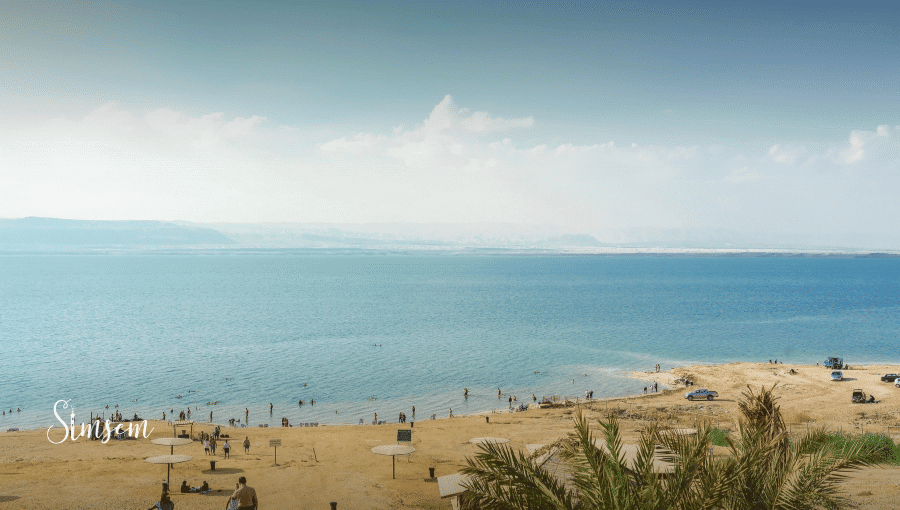
Between Petra and the capital lies something no photograph quite prepares you for — a sea so dense with salt that you cannot sink, only bob on the surface with a book. It sits in the great rift that holds the lowest dry land on earth, ringed by spa resorts that make a half-day of the mineral mud and the warm, buoyant water. It is the easy, restful counterpoint to a trip otherwise spent on your feet.
Jerash, Rome in Jordan
In the green north stands one of the best-preserved Greco-Roman cities anywhere, nicknamed the 'Pompeii of the Middle East'. About 48 km north of Amman, Jerash flourished under Rome as Gerasa, and you can still walk its colonnaded Cardo Maximus, stand in the great Oval Forum, and pass under the Arch of Hadrian, built for the emperor's visit around AD 129-130. It is the most complete Roman city most travellers will ever walk through.

Amman, the living capital
Most trips begin or end in Amman, and it rewards a day of its own. Jordan's capital layers a hilltop Citadel and a Roman theatre among the cafes, galleries and downtown bustle of a modern Arab city, and it makes a comfortable, well-connected base for day trips north to Jerash or down towards the Dead Sea. It is also the easiest place to feel how warm and hospitable Jordanians are before you head out to the sights.
Aqaba and the Red Sea
If you make it all the way south, Jordan has a coast too. Aqaba, on the Red Sea at the country’s southern tip, is the place to swap desert dust for warm, clear water and some of the easiest reef snorkelling and diving in the region. It pairs naturally with Wadi Rum, which sits just inland, so many travellers finish a southern loop with a day by the sea before flying home — a gentle way to end a trip that has otherwise been all canyons, columns and sand.

How they connect
The joy of Jordan is how little time you lose between highlights. A classic route runs north to south — Jerash and Amman in the north, the Dead Sea a short drop west, then Petra and Wadi Rum in the south, often finishing at the Red Sea in Aqaba. The whole spine can be driven in well under a day end to end, which is why even a week here can feel generous rather than rushed. A local guide ties the stops together and turns a drive into a story.
When to go
Spring and autumn are the sweet spots across the country — warm days, cool evenings, and comfortable walking at Petra and Jerash. Summers are hot, especially in the southern desert and down by the Dead Sea, while winters can be cold and even snowy in the highlands around Amman. Whenever you come, build in more time at Petra and Wadi Rum than you think you need; they are the two that travellers always wish they'd given another day.
Jordan at a glance
| Place | What it is | Why go |
|---|---|---|
| Petra | Rock-carved Nabataean city | The Siq and the Treasury; Jordan's icon |
| Wadi Rum | UNESCO desert | Bedouin camps, 4x4s and desert nights |
| Dead Sea | The lowest dry land on earth | Float in hyper-salty water; spa resorts |
| Jerash | Greco-Roman city | Colonnades, Oval Forum, Arch of Hadrian |
| Amman | The capital | Citadel, Roman theatre, a base for day trips |
Find Jordan on the map
Tap a place to open it in Google Maps — these are search links to orient you; confirm the exact entrance or meeting point when you book.


Experience Jordan with a local guide

Petra Full-Day Guided Tour in Jordan | Treasury, Monastery & Royal Tombs Experience
Full-Day Guided Petra Exploration This is a full-day guided tour exploring the highlights of Petra, Jordan …

Jerash Countryside Hike & Authentic Village Experience in Northern Jordan
A hike from the mountaintops down to the dam . Enjoy fresh air, rare birds and ducks, and stunning scenery …

Lake Camping Adventure in Jordan | Nature Escape Near Amman
A camping trip in the heart of nature between beautiful lakes, with fresh and peaceful vibes filled with laughter…

2-Day Petra & Wadi Rum Tour in Jordan | Guided Petra Visit, Jeep Safari & Bedouin Camp
Your adventure kicks off at 10:30 am when your local guide meets you at the bus stop area. If you're in Petra…
Jordan travel FAQ
What is the number one place to visit in Jordan?
Petra, the rock-carved Nabataean city reached through the Siq — give it a full day at least.
Is Wadi Rum worth it?
Very — a UNESCO desert where you stay in Bedouin camps; the overnight under the stars is a highlight for most visitors.
What is there besides Petra?
The Dead Sea for floating, Roman Jerash in the north, the capital Amman, and the Red Sea at Aqaba.
How long do I need?
A week comfortably links the north (Jerash, Amman), the Dead Sea, and the south (Petra, Wadi Rum); the country is small and quick to cross.
When is the best time to go?
Spring or autumn for comfortable days; summers are hot in the south and winters cool in the highlands.
Find a local guide: browse all local guides in Jordan by destination, from Amman to Petra and Aqaba.
Sources
- UNESCO World Heritage Centre — supports: “Petra is a Nabataean caravan-city situated between the Red Sea and the Dead Sea, an important crossroads between Arabia, Egypt and Syria”
- Wikipedia — supports: “The Wadi Rum Protected Area has been a UNESCO World Heritage site since 2011”
- jerash_wiki2 — supports: “Jerash today is home to one of the best preserved Greco-Roman cities, which earned it the nickname Pompeii of the Middle East”